
Despite this spring being the third wettest on record as well as being relatively cool until this heat wave, Eastern CT streams still become too warm for trout by mid-June. That is not to say that you can’t find trout or catch them, but I prefer to avoid targeting them.
It really is not an issue for me this season since I have had some setbacks from knee surgery and haven’t fished for over a month and probably won’t be able to for another month?
My last outing was on a local stream not far from my home. I decided to try it after my first clearance from surgery before some setbacks happened.
This stream is very dependent on constant water and gets warm rather quickly. I knew that. I chose it because I still had some driving restrictions, and I didn’t want to try and wade anything too rough. In most cases, you can wet wade it or use hip waders if you still have a pair.
Wet wading Eastern CT streams have their merits, but in my case, I still couldn’t have my bandages or sutures wet.
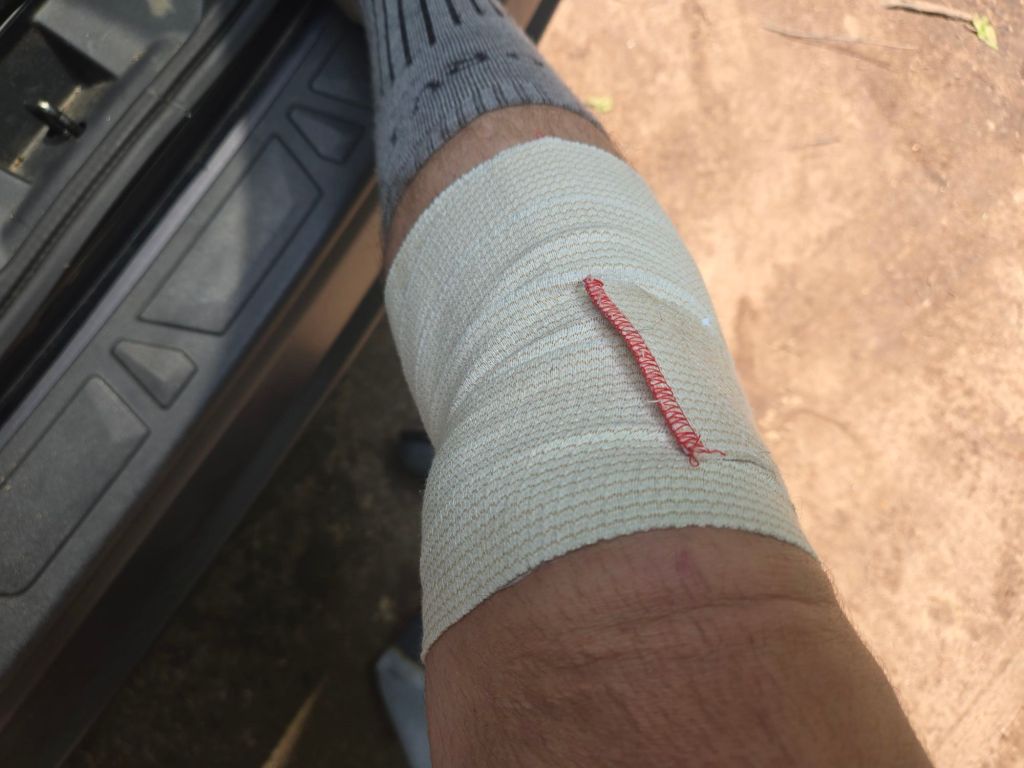
So, I took the added step of wrapping my knee with an ace over my bandages and donned full chest waders just to be certain of any accidents.
Overall, wading was very easy, as is a lot of Eastern CT streams. Most are a mix of fine gravel and sand, which makes for easier wading.
I needed to get out somewhere, and I needed to practice my skills. They are perishable!
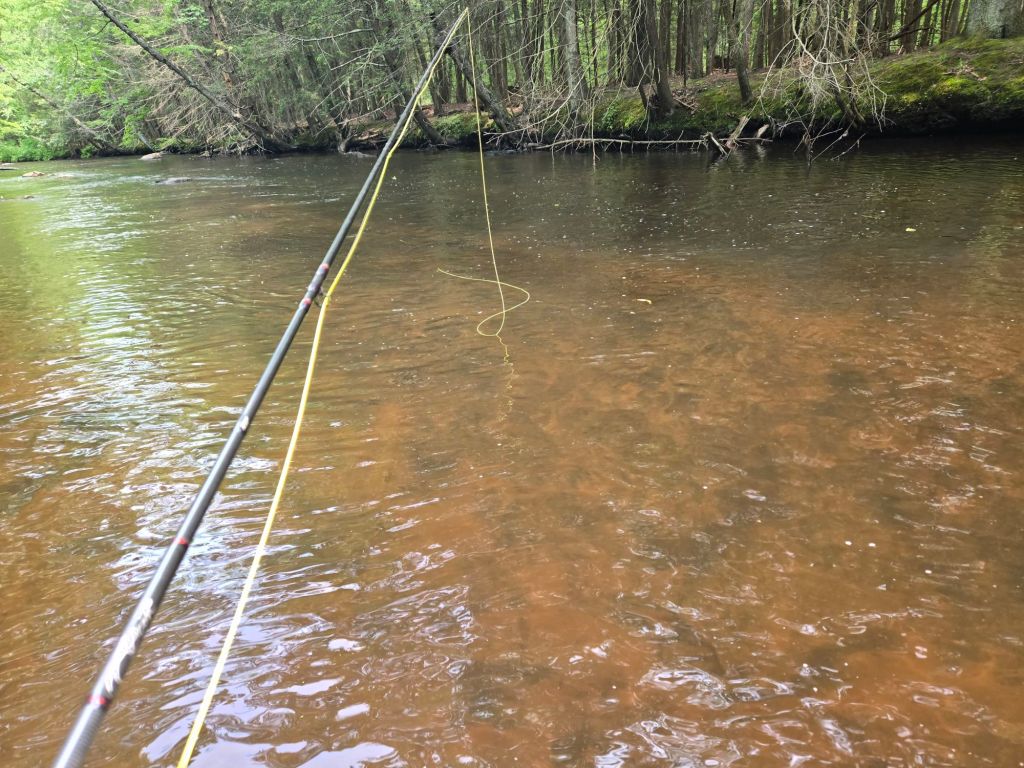
I started off with a #10 deer hair ant. This particular pattern is quite effective, particularly in central Pennsylvania.
I wanted to use a larger pattern to avoid catching the dinks. Fallfish are abundant and readily hit flies. They take flies very similar to trout as well, although there are some subtle differences.
I started in some slow water, focusing on plopping the ant along the banks, and edges of seems close to the bank.
A common mistake is to drift them long distances. You still should attempt to maintain a natural drift with a slack leader cast and a properly constructed leader. However, your drifts should be short! I learned that the hard way on Spruce Creek with Joe Humphreys one summer.
I kept my drifts short with Slack and tried covering water as I slowly moved upstream.
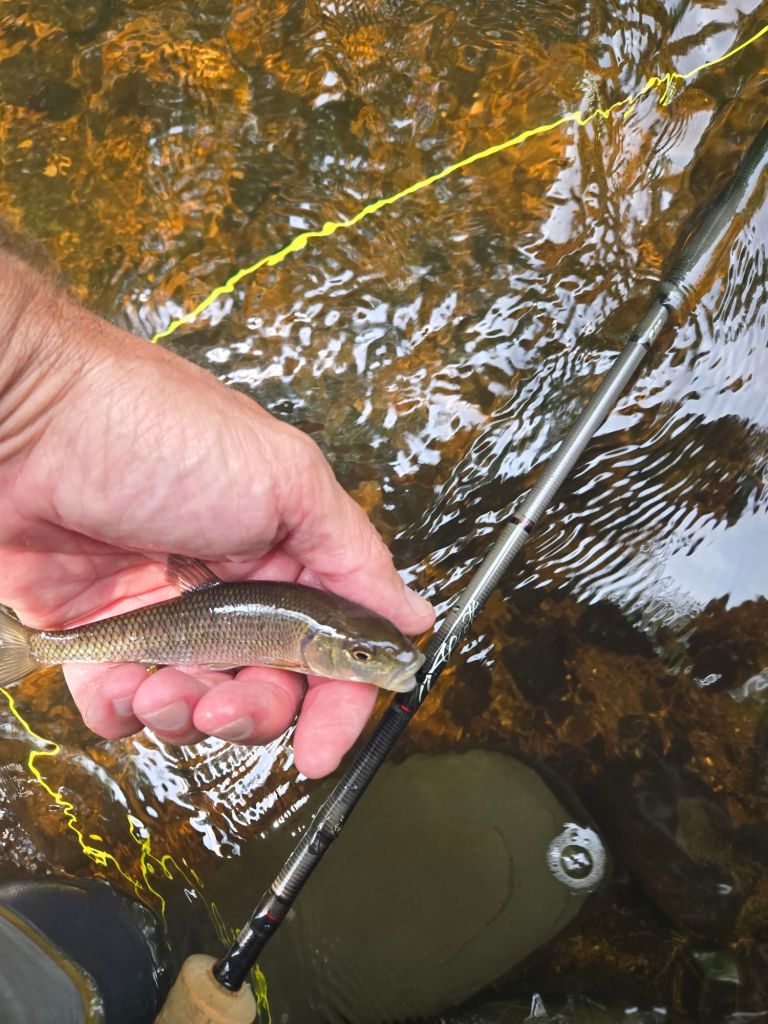
I still caught dink-ish fallfish, but they were big enough to take the larger pattern.
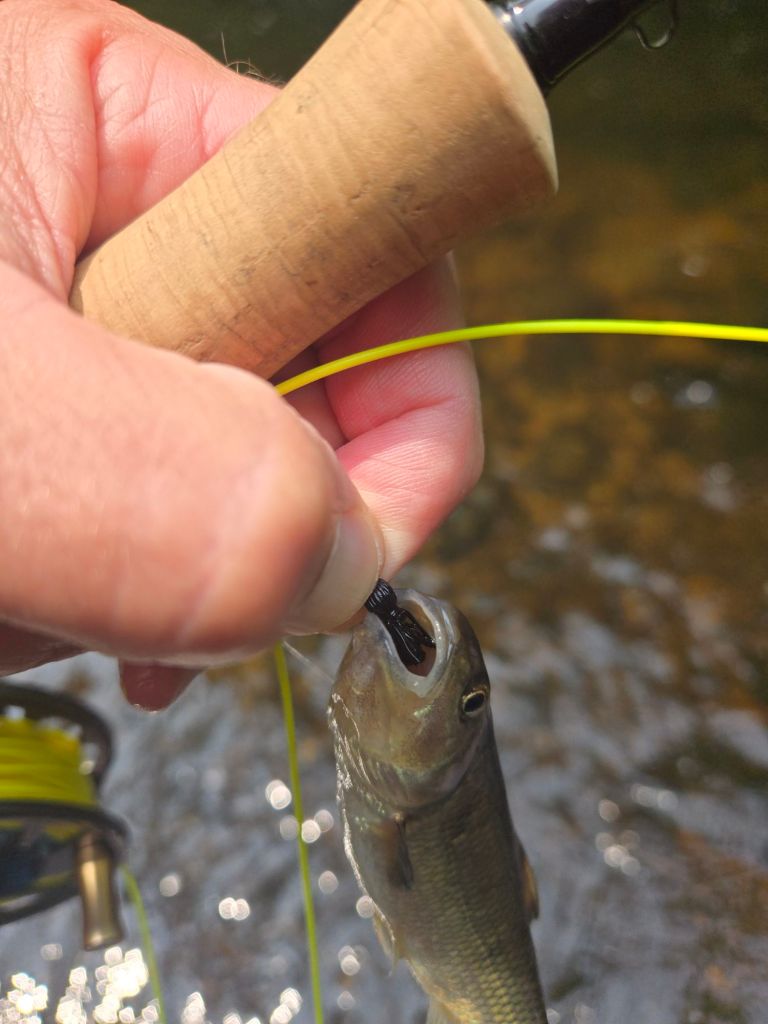
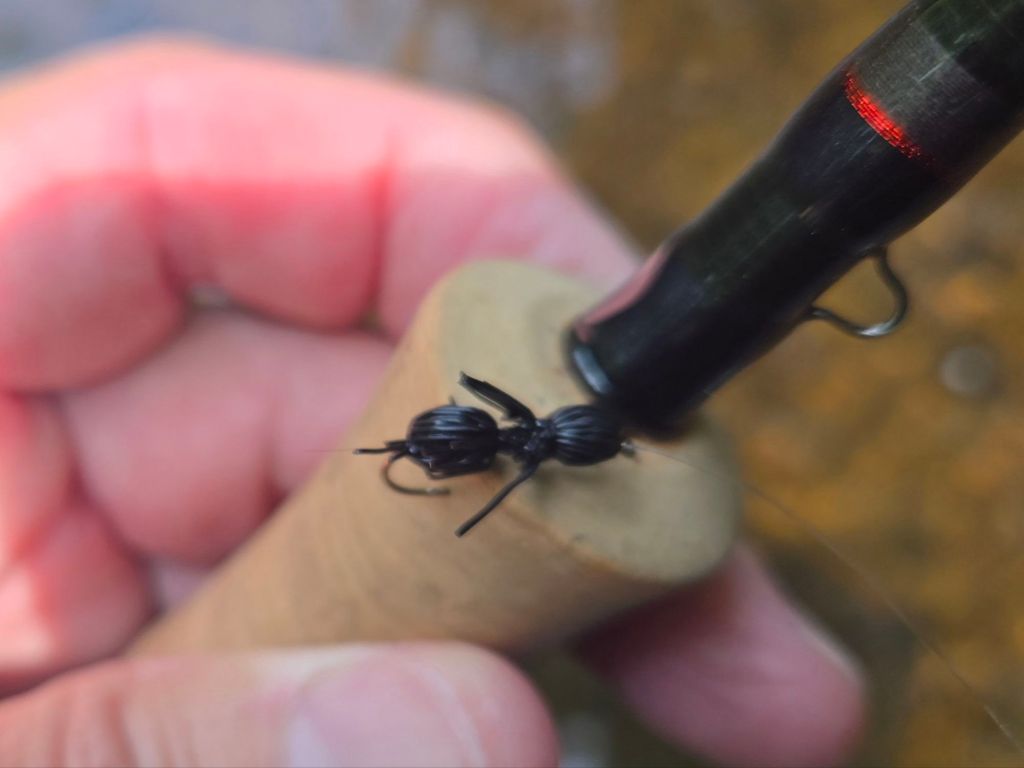
Another hard lesson learned with Joe was the fact that I wasn’t paying attention to how the back of my ant looked. I started taking fish with him on Spruce, but soon was getting refusals even though I had the right cast and right leader. In that lesson, I discovered that the trout was turned off from the pieces of hair sticking out the back. As soon as I cut them, I was back into big Spruce browns and rainbows !
This lesson readily transfers over to the fallfish as well !
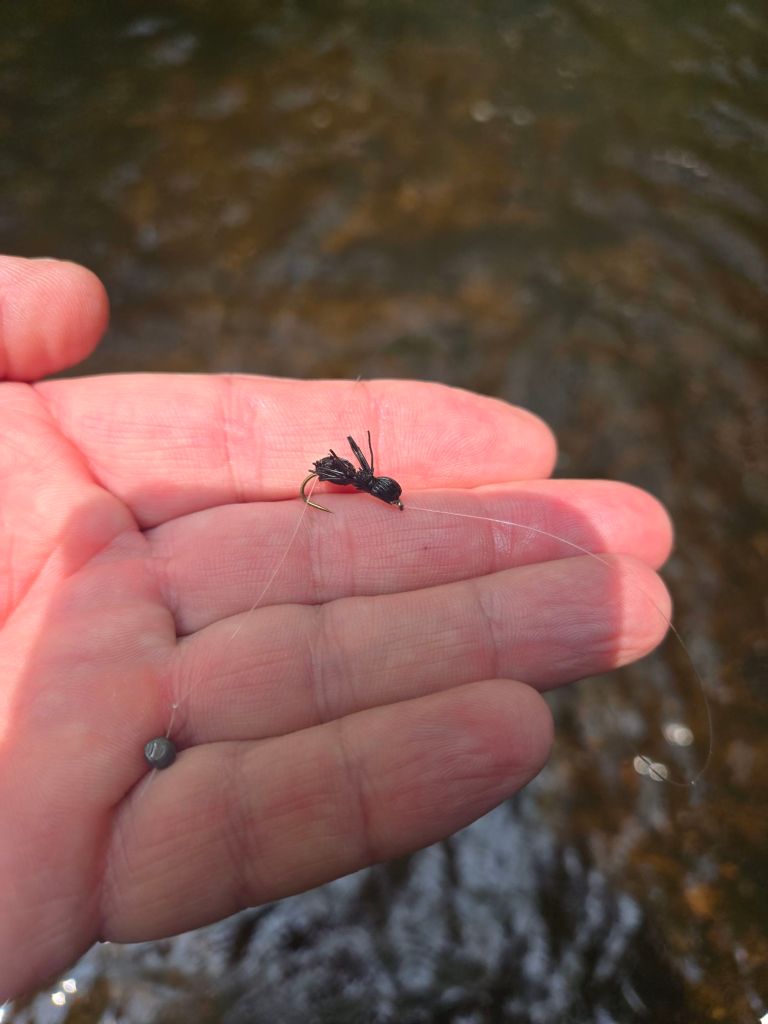
When they stop taking on top for whatever reason, go underneath for them with splitshot. You will be amazed at the results!

Another benefit of fishing a marginal stream is that you can practice casting weights and flies under tree limbs, etc., and not worry about blowing a cast over a big holdover or wild trout. As I mentioned before, fly casting and fly fishing are perishable skills, and you need to be fishing constantly! On a marginal stream, you can build that muscle memory and eye hand coordination before you go on that epic trout trip!
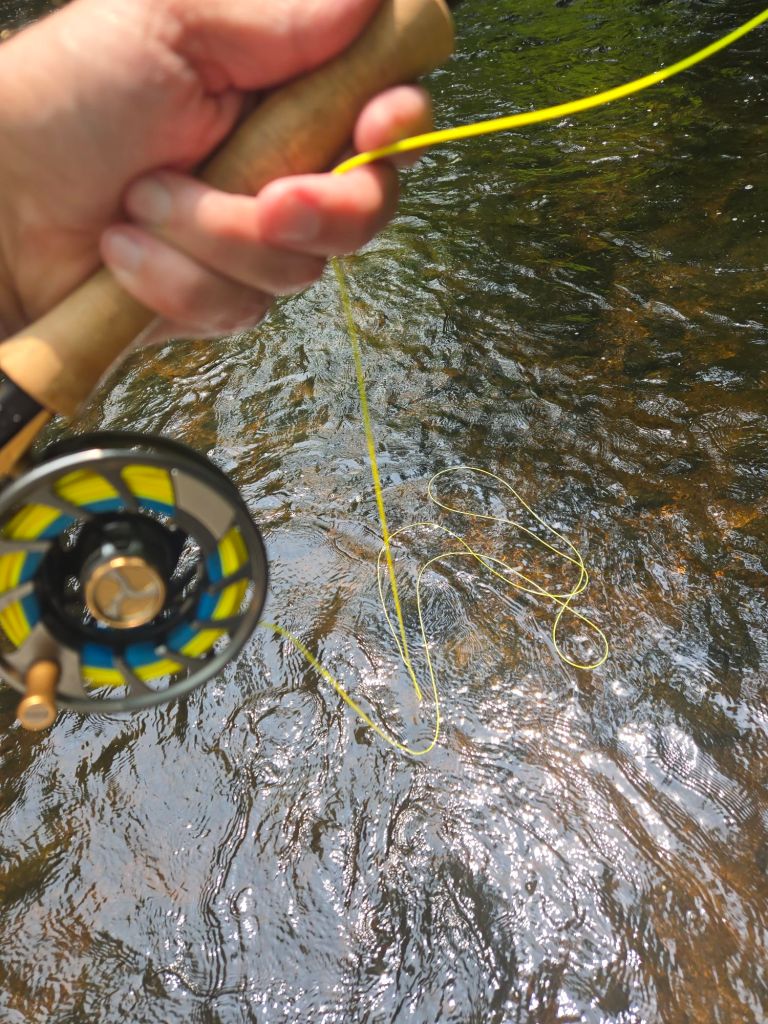
While you are out there, practice managing line, whether it is a strip, hand twisting, or just piled underneath you. You should only have the amount of line out of your reel that you need – anything more a distraction or wose – a future tangle!
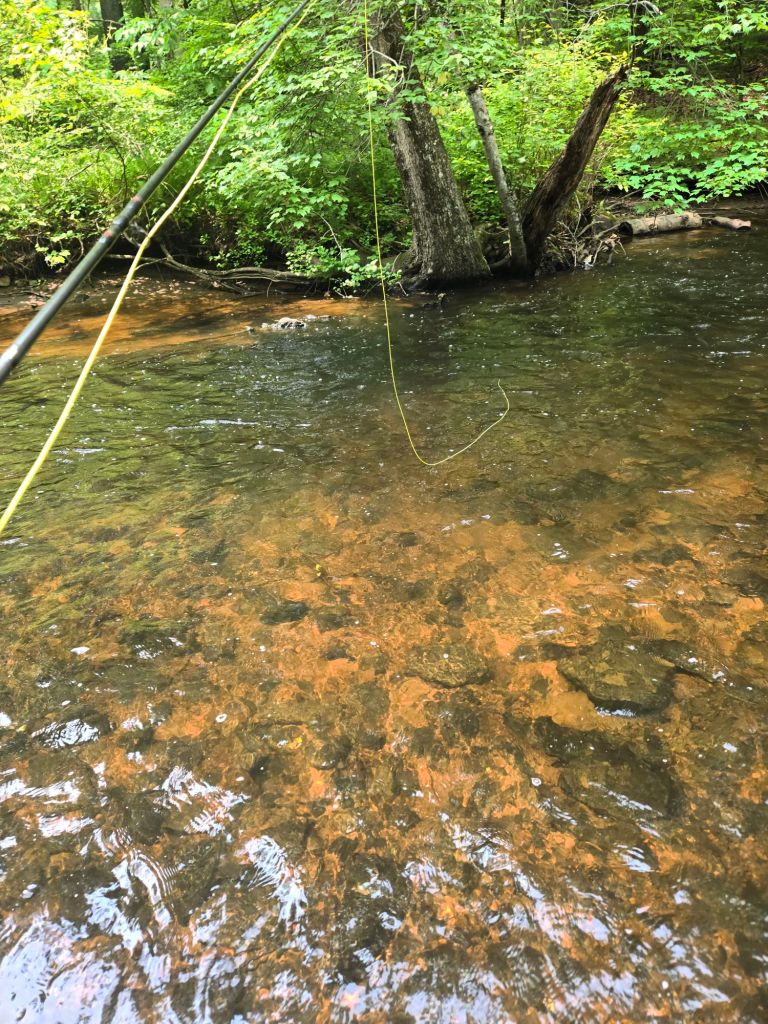
Every stream has prime areas like this pocket/run. It has depth. It has cover. It has extra oxygenation. Do not pass them up even if it is a harder cast or you risk tangling. You can always wade over and retrieve it or tie on another fly. In this case, it was easy and open, but the point remains. If you saw this on a stream that supports trout year round, there should be a decent fish there.
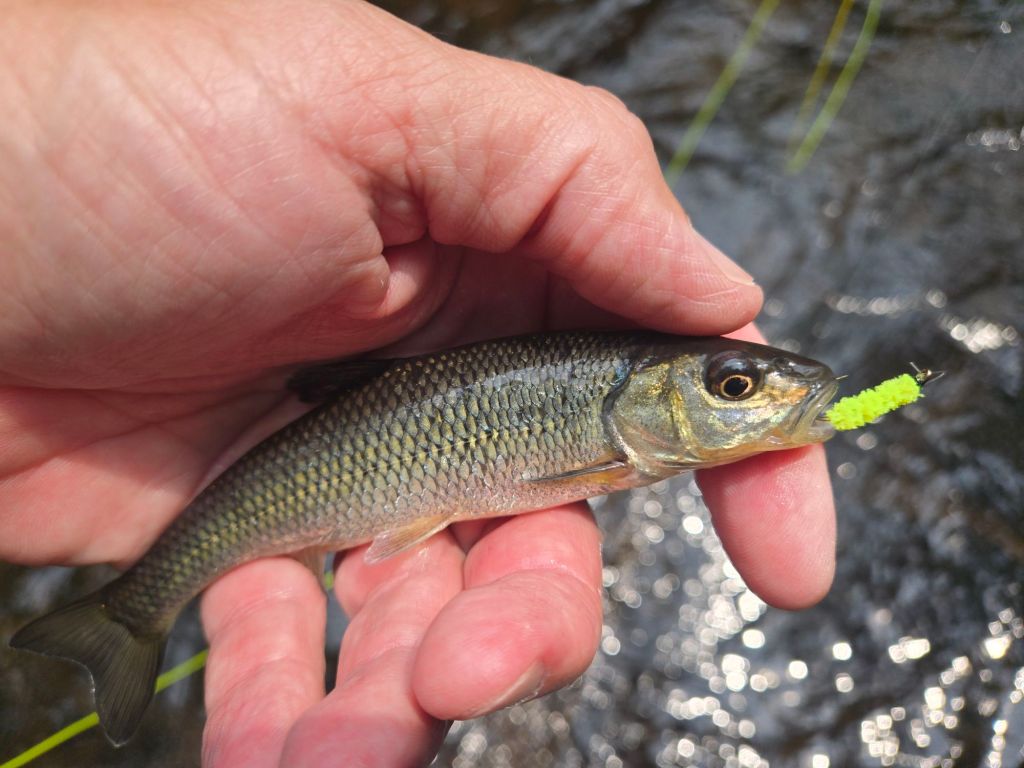
Fish your ” junk ” patterns. Typically, you don’t need specific flies for any of the Eastern CT streams. General fly patterns are all that you really need. You still might need specific patterns during a hatch, but more often than not, something like this will do.
As for the Green Weenie being a junk fly? I still consider it to be, but that doesn’t stop me from fishing it. It is also semi impressionistic for a caddis worm and a green oak worm.

Use this time to get comfortable fishing around debris and wood. There’s always some species of fish in, around, and under it!
Finally, you are apt to be completely alone while you practice your skills or experiment with new flies and techniques and not waste your precious time on pressured and technical waters.
I hope someone gleaned some new insights with this post. I hope your next fishing trip is more successful because of this post.
As always, I urge you to carry a thermometer everywhere and avoid fishing over stressed trout. Also, I encourage you to join your local Trout Unlimited chapter, particularly Thames Valley # 282. Conservation groups, like TU, help protect and restore trout streams all over the country. And, they are also a voice to preserve public lands and water rights. Even marginal streams are getting increasingly posted!
 Eastern CT Fly Fishing, LLC